Category: The Postcards Collection

Behind-the-shot travel stories and destination guides from Preston Ferguson’s own trips — the places, light, and moments that make up The Postcards Collection.

  • The Seoul Neighborhood With a Curfew for Tourists (And Why We’d Stay There Again)

    The Seoul Neighborhood With a Curfew for Tourists (And Why We’d Stay There Again)

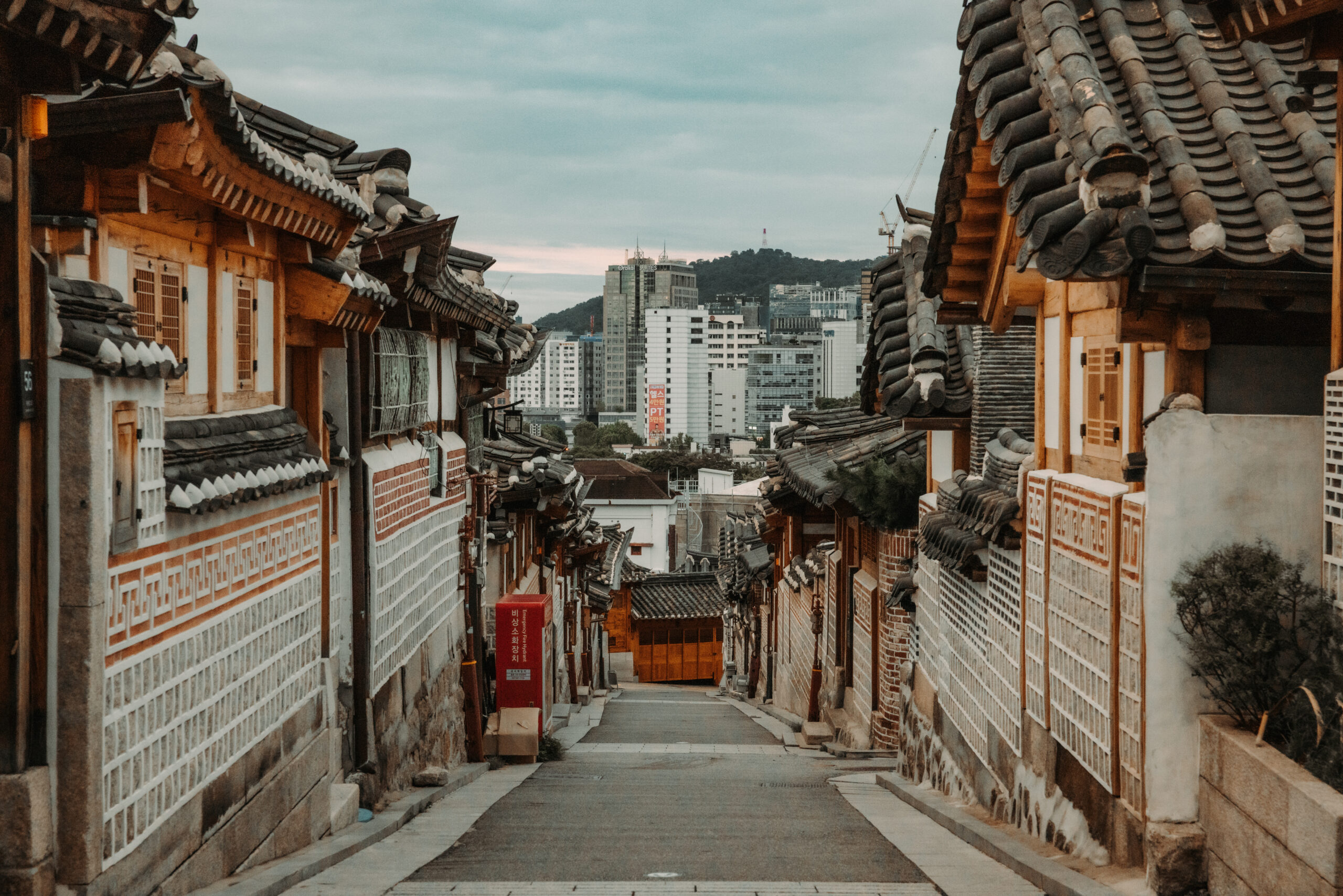
    Here’s a sentence I didn’t expect to write about a vacation rental: we had a curfew. Not a suggestion, not a polite house rule taped to the fridge — an actual, enforced-with-fines, 10am-to-5pm curfew, because we were staying inside Bukchon Hanok Village, one of Seoul’s last neighborhoods of traditional hanok houses, and the city would very much like tourists to stop wandering through it at all hours taking pictures of people’s front doors.

    We found this out the honest way: by almost getting stopped. The rule is real — Seoul designated Bukchon a Special Management Area and started fining daytime tourist traffic through the residential lanes in early 2025 — and if you’re actually staying inside the curfew zone, not just visiting it, you need to prove that on the spot. We kept a printed Airbnb confirmation in our bag the entire trip like it was a hall pass, because apparently it was one.

    A hanok rooftop inside Bukchon Hanok Village, Seoul

    The house itself made the whole arrangement worth it. Floor-to-ceiling glass walls around a private garden, an outdoor soaking tub we had to fill ourselves, a toilet seat with more technology in it than my first car, a little projector for movie nights, a bedroom we didn’t need. And here’s the part that surprised me most: for a house made almost entirely of glass, sitting in the middle of a dense historic neighborhood, it never once felt like anyone could see in. Six minutes from the edge of the village to the heart of it, K-pop merchandise and what looked like a film shoot happening two streets over, and inside our little glass box, total privacy. That contrast — ancient roofline, glass walls, ultra-modern toilet, ten feet from a K-pop set — is Seoul in one house.

    I'm Not in Seoul, But I Have Listened to K-Pop — Vintage Travel Postcard Pack

    I’m Not in Seoul, But I Have Listened to K-Pop — Vintage Travel Postcard Pack

    So here’s the actual travel tip buried in the story: if you’re picking where to stay in Seoul, a hanok inside Bukchon isn’t just a photogenic Instagram backdrop — it comes with a real rule most visitors never hear about until they’re standing in the alley wondering why a stranger is asking to see their phone. Bring the confirmation. Respect the hours. And go anyway, because waking up under a two-hundred-year-old roofline with a heated toilet seat is a genuinely great way to start a morning in a country that does old and new better than almost anywhere else we’ve been.

    The rest of that trip — palaces, DMZ tunnels, a market pancake worth getting rained on for — is mailed home the same honest way. Curfew included.

    Shop the South Korea collection

  • New Zealand Has the Best-Dressed Livestock

    New Zealand Has the Best-Dressed Livestock

    I went to New Zealand to photograph landscapes and came home with an indefensible number of photos of cows. I regret nothing.

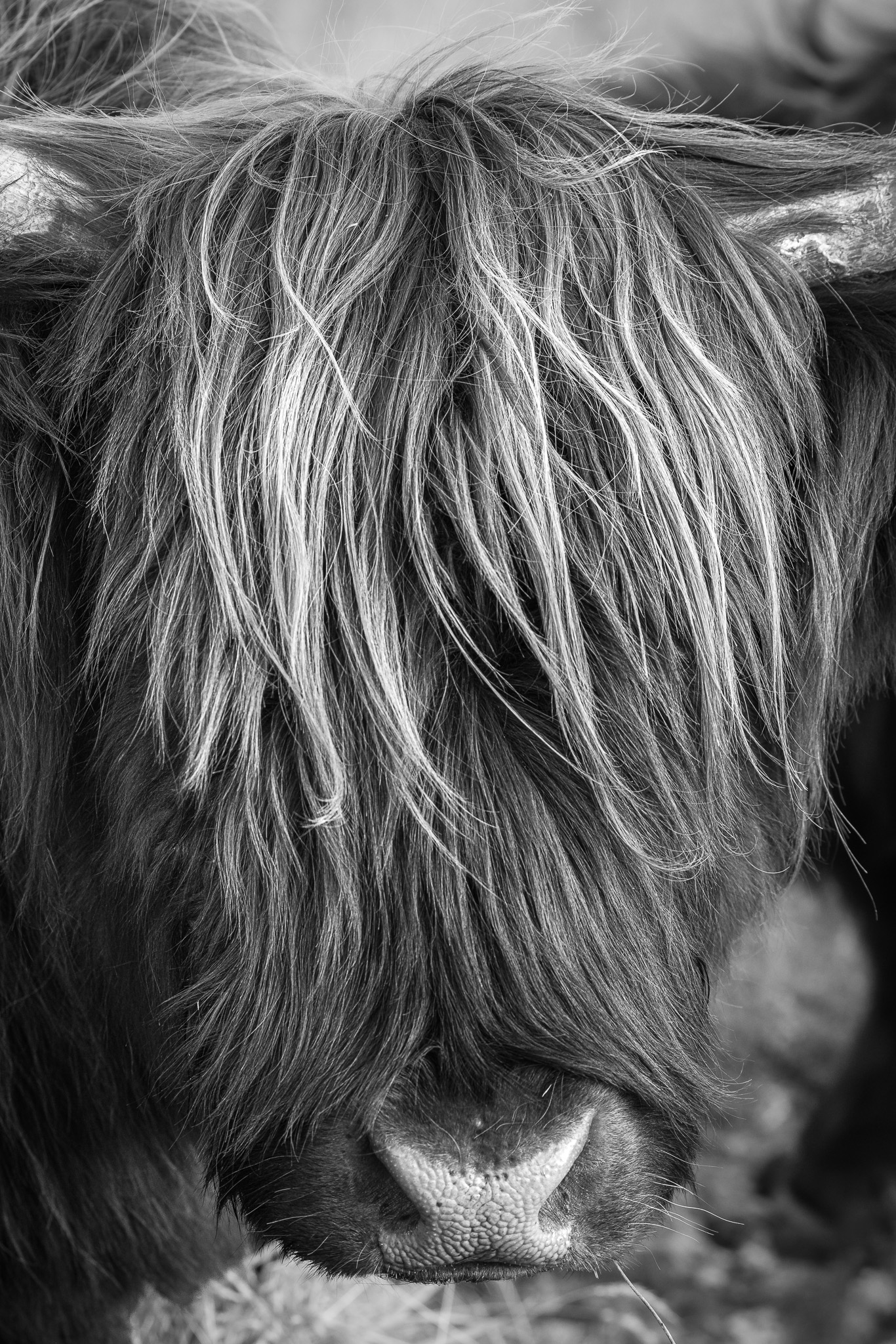
    Here is the situation. New Zealand has the best-dressed livestock on the planet, and I will not be taking questions. The highland cows alone are worth the airfare — enormous, unbothered, with the exact haircut of a rock guitarist who’s been through some things and come out serene. They look at you like they’ve read your emails and decided to forgive you.

    The llamas are running a close second, mostly on attitude. And the sheep — well, there are a lot of sheep in New Zealand, so statistically some of them are going to be photogenic, and they are. I’d be lining up a wide landscape, some genuinely serious composition, and a sheep would wander into frame with better light on it than the mountain.

    I don’t have a grand point here. Not every photograph has to be about the raw, untouched majesty of the end of the earth. Sometimes it’s about a cow with a fantastic fringe. The trip that produced the serious South Island guide also produced a small gallery of extremely dignified farm animals, and I think both are allowed to exist.

    A few of these may end up as prints, because apparently I now make animal portraits. If a highland cow ends up on a postcard, you’ll know exactly why. Until then — see where I’ve been. It’s mostly mountains. It’s a little bit cows.

    — Preston

  • I Drove to a GPS Coordinate I Wasn’t Sure Existed

    I Drove to a GPS Coordinate I Wasn’t Sure Existed

    Everyone else had a plan for the day. Alex was golfing. Matt and Rachel were shopping. And I had a set of GPS coordinates I’d heard were worth the drive, with one small problem: I wasn’t entirely sure the place existed.

    Not “existed” in a philosophical way. Existed in a “the internet said there was a cave and a waterfall back here, but the internet says a lot of things, and it’s probably flooded and definitely cold” way. So I rented a car and drove toward them anyway.

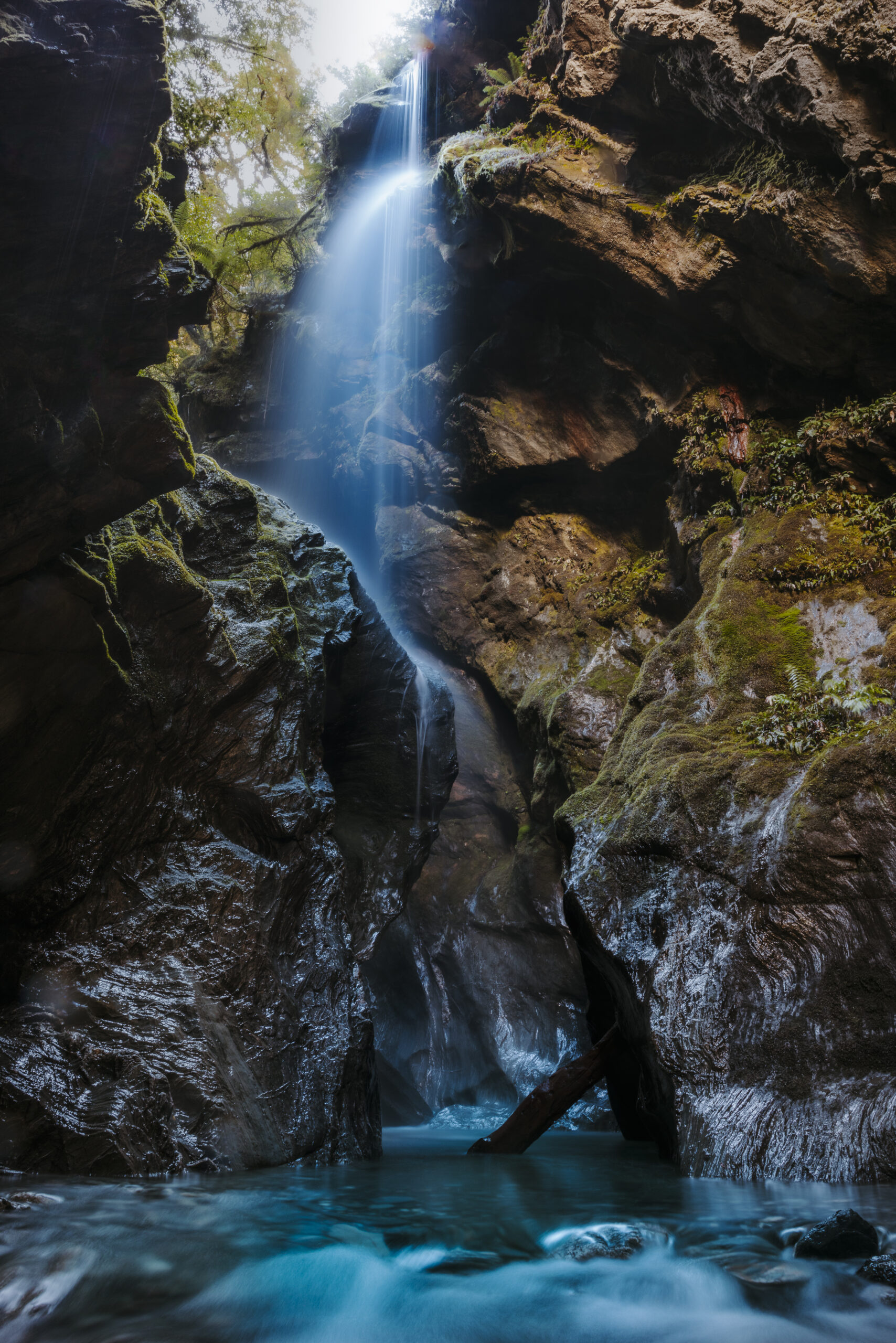
    I stopped at the Blue Pools first, which are exactly as advertised — glacial water so clear it plays tricks on your sense of depth. Then I kept going, out toward Haast Pass, to the coordinates. The water was up. It was cold in the way that gets into your decision-making. But I came prepared — I always come prepared, because the entire premise of what I do is that I was standing in the actual place, and you can’t stand in the actual place from the warm car — and I got back into the cave, to the waterfall, and made the photographs I’d driven out there for.

    Why this is the whole brand in one drive

    I sell real photographs of real places. That line does a lot of quiet work. It means every image has a morning attached to it, a weather report, usually a mild bad decision. The Haast cave is the literal version: nobody handed me that frame. I drove to a coordinate I wasn’t sure was real, on my one free day, and got cold on purpose.

    I’m not telling you this to sound rugged. I’m telling you because when you buy one of these — a postcard, a print, the eventual wall-sized edition — you’re buying the part where I actually went. That’s the difference between what I make and a stock library or an AI that has never once had wet socks. My feet were cold. That’s the product.

    If you want to follow the same road

    The Haast run is one leg of a much bigger South Island loop. I mapped the whole thing — Queenstown to Milford to Haast to the Wanaka Tree to Tekapo — in the South Island photographer’s guide, including where to point the camera and which stops are worth the detour. The cave photos are heading into the print store as I finish them. Until the wall-sized version exists, start small. It still counts.

    — Preston

  • 3 Days in Sydney: A Photographer’s Walk-Through

    3 Days in Sydney: A Photographer’s Walk-Through

    Three days is not enough time to “do” Sydney, so I didn’t try. I walked it, shot it early, and let the afternoons go slow. Here’s the exact route we took — useful if you’ve got a camera and roughly the same amount of time.

    Day 1 — The greatest hits, on foot

    Start at the Opera House, because you’re going to anyway, then walk across the Sydney Harbour Bridge — the view back toward the sails is the one you think you’ve already seen a hundred times, and it still gets you. We carried on to Luna Park (the giant grinning face at the entrance is a gift to anyone holding a camera) and took the ferry back. Sydney is a harbor city; the ferry is not a tourist activity, it’s just the good way to travel, and it happens to hand you a moving viewpoint of the skyline for the price of a normal ticket.

    Day 2 — Bondi, slowly, then a sunset ferry

    Bondi Beach in the morning, a long unhurried breakfast, then the Bondi coastal walk — cliffs, pools, and more joggers in better shape than you. In the evening we went out to the Watson Bay lighthouse, then timed the ferry back for sunset so we’d catch the Opera House as the light went. That’s the move I’d repeat: don’t shoot the Opera House at midday with everyone else. Let the ferry deliver it to you at golden hour instead.

    Day 3 — The one photograph, then actually relax

    I got up before sunrise and walked to Mrs Macquarie’s Chair in the dark. That’s where the Opera House image I sell comes from — the tile detail up top, the part we stop seeing because we’re so used to the whole building. (The full pre-dawn story is its own post: Greetings From Sydney.) After that, we let the day off the leash — over to Manly Beach to just hang out. We’d talked about a scuba dive and skipped it; the water was cold and, honestly, sometimes you’d rather enjoy the trip than white-knuckle a dive you’ll spend all morning dreading. Dinner was in Chinatown, street tables, the most attentive service of the whole trip.

    A note on how Sydney feels

    We’d just come off a run of trips through Asia, and Sydney hit differently — so Western, so familiar, that it made the world feel small for a minute. A huge, buzzing city on the far side of the planet that could almost be home. Worth knowing going in: it’s an easy city to love, not a hard one to decode.

    Where to point the camera (the short list)

    Mrs Macquarie’s Chair at sunrise, the bridge walk looking back at the sails, the sunset ferry, and Luna Park’s face for something with a little humor in it. Shoot the details, not just the postcard — that’s usually where the actual photograph is hiding.

    Speaking of postcards: the Opera House detail became Greetings From Sydney in the Postcards Collection, if you’d like the small version of a place you may or may not make it to. Start there.

    — Preston

  • Our Plane Tried to Land in Queenstown Twice, Then Gave Up

    Our Plane Tried to Land in Queenstown Twice, Then Gave Up

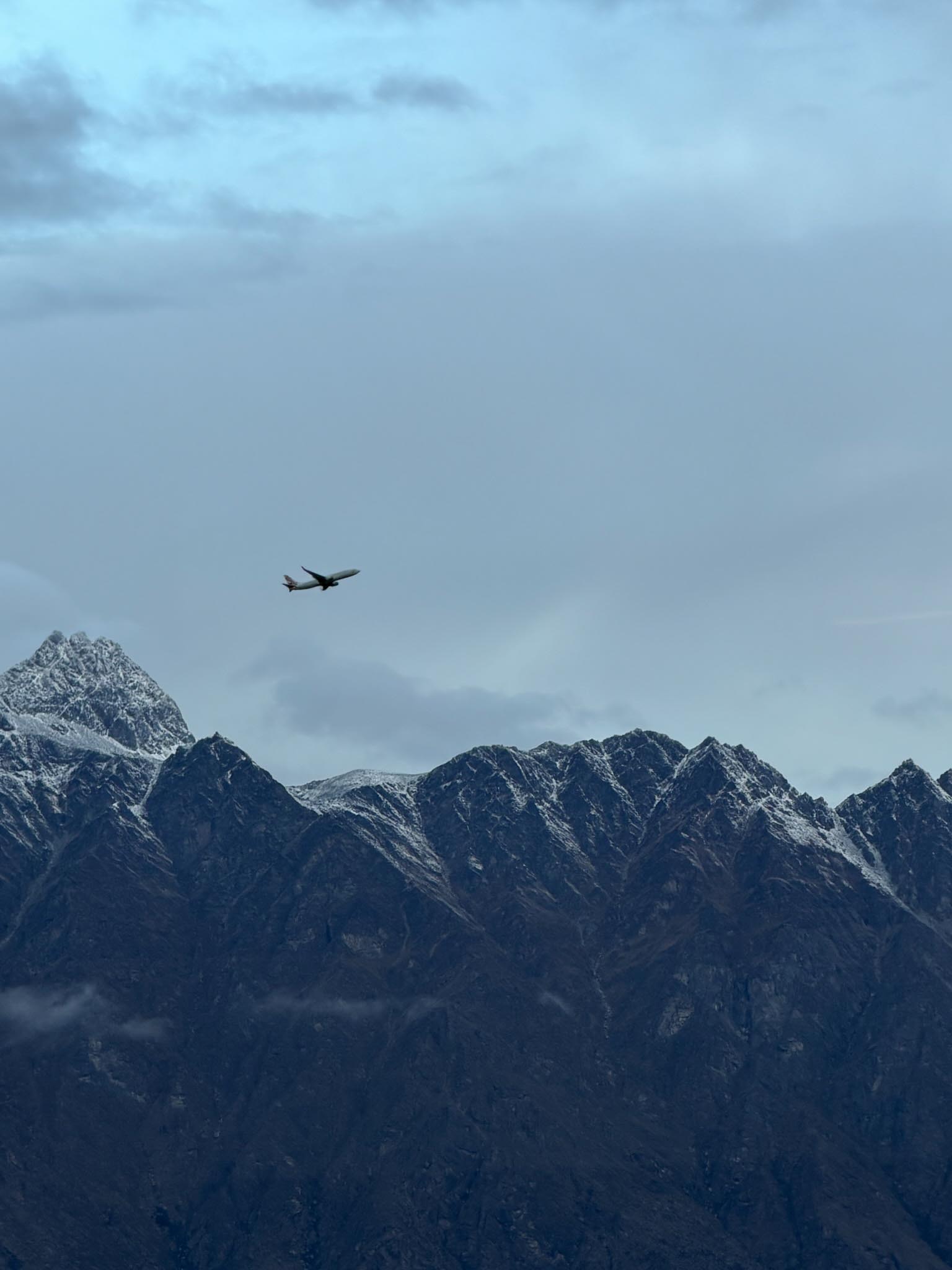
    Queenstown’s airport is tucked between mountains, which is lovely in a photograph and slightly less lovely when you are trying to physically land an airplane in it.

    We came in the first time and got close — close enough to see individual blades of grass, close enough that everyone had already done the quiet thing where you decide the flight went fine and you’re basically home. Then the engines spooled back up and we climbed. Wind. The pilot came around and tried again from the other runway direction, got down to what felt like fifty feet, and pulled up a second time. Two runs at the ground, two polite retreats, and then the announcement nobody wants on the leg they’ve been looking forward to for two years: we were diverting to Christchurch for the night.

    Now, here’s the thing about traveling with Matt. Matt is a master planner. The kind of person who has a backup dinner reservation for a city he was not supposed to be in. We hadn’t been on the ground in Christchurch for an hour before he’d produced a plan: Kaiser Brew Garden, in the Riverside Market — a whole building of restaurants that used to be shipping-container eateries, now a proper food hall. We ate well, slept, and flew back the next morning, and this time the mountains let us in.

    I want to be honest about why I’m telling you this instead of just showing you the pretty version. The pretty version is real too — Queenstown turned out to be a genuine dream, and I’ll get to that. But the brand here has always been I was actually there, and “actually there” includes the part where the plane wouldn’t land and we ate schnitzel in a city we hadn’t booked. The trip is the trip. The mishaps are half of why it’s worth writing down.

    What we got once we finally landed

    Everything, basically. Go-karts and dinner at the top of Skyline Queenstown, looking down over the whole valley. A perfect crisp fall day in Arrowtown, renting bikes and riding out through the countryside to wineries. And a bus-and-boat run out to Milford Sound — we were supposed to fly, but it rained the entire time, so we bused it. Which sounds like a downgrade until the rain turned every cliff face into a waterfall that only exists when it’s pouring. Cold, soaked, worth it. That’s a sentence I could put under half the photographs I’ve ever taken.

    The part that pays for the story

    A lot of what I shot on the South Island is heading into the print store — Queenstown, the Southern Alps, the road out to Milford. If you want the practical version of this trip, the full South Island photographer’s guide walks the whole route and tells you where to actually point the camera. And if you just want a small piece of New Zealand on your desk before the wall-sized version exists, start with the postcard. Nobody starts with the wall-sized version.

    — Preston

  • A Photographer’s Guide to New Zealand’s South Island (Where to Point the Camera)

    A Photographer’s Guide to New Zealand’s South Island (Where to Point the Camera)

    We spent the better part of a week working our way across New Zealand’s South Island with the cameras out the entire time. Here’s the route we actually took, and — more useful for you — where the light genuinely earned its keep. Consider it the guide I wish I’d had, written by someone who was cold and standing in most of these spots.

    First, a warning.

    Getting in: the Queenstown airport will test your nerves

    Queenstown’s airport is tucked between mountains, and the wind has opinions. Our plane got within about fifty feet of the ground twice — once from each direction of the runway — aborted both times, and then simply gave up and flew us to Christchurch for the night. So: book a flexible fare, keep your expectations loose, and maybe have a Christchurch dinner spot in your back pocket. (Ours was Kaiser Brew Garden in Riverside Market. You’re welcome.)

    Queenstown & Arrowtown — your base

    Queenstown is the hub. Ride the Skyline gondola up at dusk for the town-and-lake view (the go-karts at the top are non-negotiable, for research purposes). Then give Arrowtown a full slow day — rent bikes and ride out through the countryside to the wineries. If you can time it for autumn color, do; the whole valley turns.

    Milford Sound — go even if it’s raining. Especially if it’s raining.

    We were supposed to fly back from Milford and got rained out, so we bused. Best accident of the trip: the rain turns the cliff faces into hundreds of temporary waterfalls you’d never see on a clear day. Take the boat. Get soaked. Worth it.

    Blue Pools & Haast Pass — glacial blue, and then some

    The Blue Pools are an easy, gorgeous stop — that impossible glacial color. And if you’re willing to get cold and a little lost past Haast Pass, there’s more back there than the pull-offs suggest. (That one turned into its own story.)

    The Wanaka Tree & Lake Pukaki — the postcard blues

    The lone Wanaka Tree is the most photographed tree in the country, so shoot it at first light or blue hour unless you enjoy other people’s tripods in your frame. Just up the road, Lake Pukaki’s glacial blue barely looks real; a roadside viewpoint does the whole job.

    Mt John Observatory & Lake Tekapo — save the overcast day for this

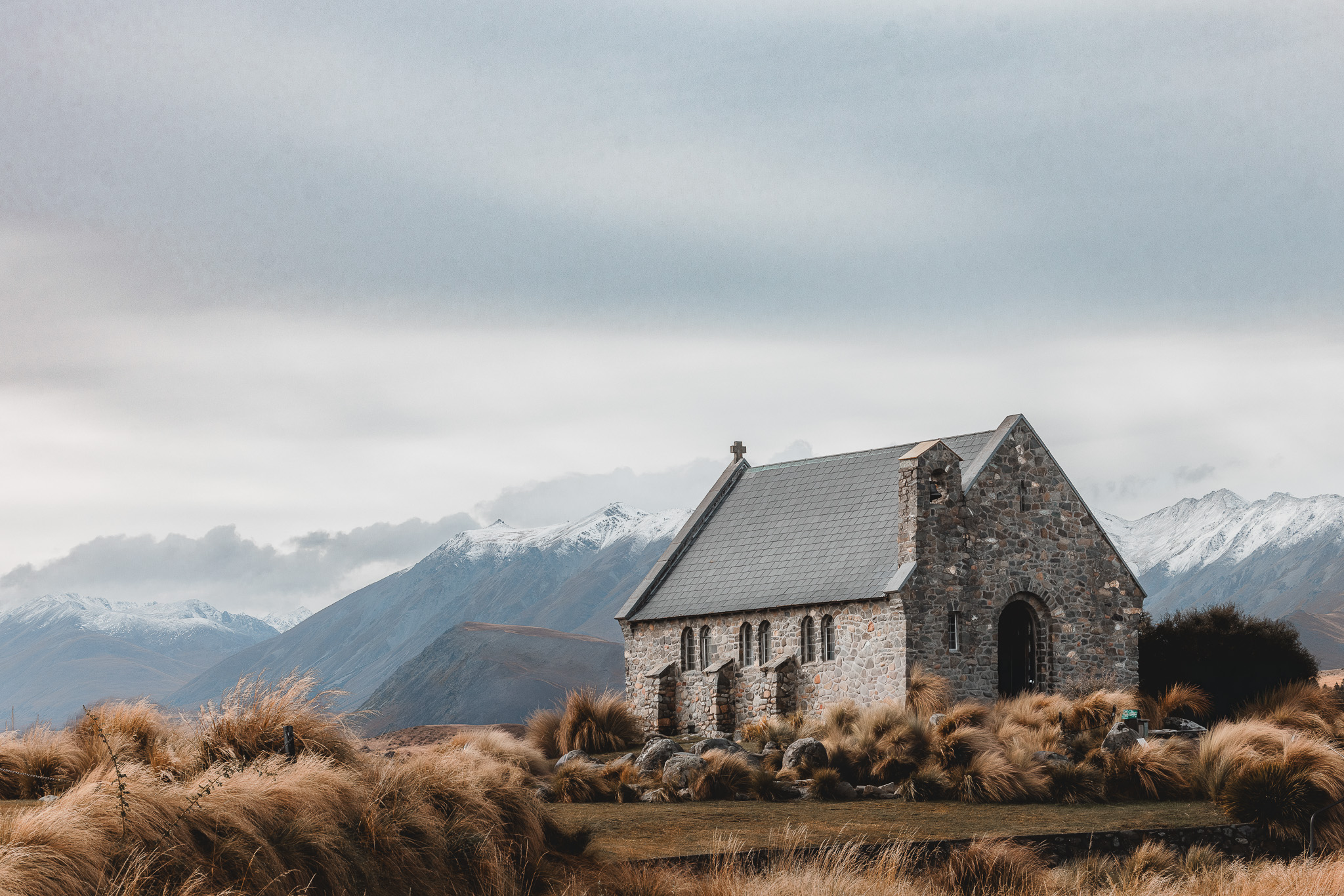
    Climb to the Mt John observatory for the big-sky view over Tekapo (ours was a last-minute call and immediately worth it). Down on the lakeshore is the Church of the Good Shepherd — a tiny stone church against all that openness. An overcast sky is a gift here, not a setback.

    The train + the ferry — shoot the coast, watch the weather

    The Christchurch → Picton train (spring for first class; you’ll be wined and dined past open-air coastal views) hands you the South Island’s coastline on a plate. Then the ferry across the Cook Strait to the North Island — smooth for us, and the last one to make it across for a couple of days as the weather turned. Check the forecast, and don’t dawdle.

    The prints

    A lot of these stops came home as photographs, and several are becoming prints in the shop. If you’re just starting a wall, start with a postcard. That’s how every collection starts.

    — Preston

  • The Church of the Good Shepherd: New Zealand at the End of the Earth

    The Church of the Good Shepherd: New Zealand at the End of the Earth

    I didn’t plan this one. Which, if you ask me, is usually when the good ones happen.

    We’d been photographing our way toward Christchurch — the lone Wanaka Tree standing out in the lake like it knows it’s being watched, the impossible glacial blue of Lake Pukaki, a last-minute detour up to the Mt John observatory because someone (me) couldn’t help himself. We stopped for lunch by Lake Tekapo. And there, right on the shore, was this little stone church.

    The Postcards Collection – New Zealand Lake Tekapo Fig 1 – Framed Print

    383be92f-2afe-4458-81f9-2e183e948490

    The Church of the Good Shepherd has stood on that spot since 1935 — which is to say, longer than anyone I thought to ask. It’s small. It’s plain. And on the day we were there it was flatly, gloriously overcast: the kind of grey light photographers pretend to be annoyed by and secretly adore, because it turns the entire sky into one enormous softbox.

    I set the lake in front of it, the mountains behind it, and the little church in the middle of all that openness — and I knew before I’d taken the frame that it was the one. It’s the whole New Zealand experience in a single picture: just enough man-made to feel like home, sitting right on the doorstep of the wild.

    What New Zealand actually feels like

    Raw, untouched beauty is the closest I can get. It feels like the end of the earth — hostile enough to keep you honest, cold enough to remind you you’re a guest, and beautiful in a way that, somehow, no one has managed to wreck yet.

    (I also came home with an indefensible number of photos of highland cows. New Zealand has the best-dressed livestock on the planet, and I will not be taking questions.)

    A shaggy highland cow with a long fringe over its eyes, standing in a green New Zealand pasture.
    Exhibit A. I rest my case.

    The postcard

    The church became part of the Postcards Collection — with a print for the wall, if a small church at the end of the earth earns a bigger spot in your house than a postcard rack. Start with the postcard. That’s how every collection starts.

    — Preston

  • Greetings From Sydney: The Opera House Detail You Never See

    Greetings From Sydney: The Opera House Detail You Never See

    We got up before the sun to photograph a building that is, by most counts, one of the most photographed on earth. Which, when I say it out loud, sounds like a bad plan.

    Matt and I walked over to Mrs Macquarie’s Chair in the dark — a little cold, mostly quiet. There was a pair of seagulls having what I can only describe as a strong disagreement, and one other couple further out toward the point who had very clearly not come for the architecture. And then there was the Opera House, waiting to catch the first light.

    Here’s the thing about the Opera House: we’ve all seen it. The whole white sweep of it, sails and all — from the ferry, from the bridge, from every postcard rack in New South Wales. And because we’ve seen the whole thing so many times, we’ve quietly stopped seeing the parts. Up close, those sails aren’t smooth at all. They’re clad in more than a million tiles in this restrained little chevron pattern, and almost every photo flattens the whole thing into one white blur.

    So that’s what I went for. Not the building — the skin of it. The tile detail up top, catching the very first light, set against the kind of deep blue you only get for about twenty minutes before the day turns ordinary.

    The Postcards Collection – Sydney Opera House – Framed Print

    04db2c7e-b223-43ab-8b26-2fcdc5c6581c

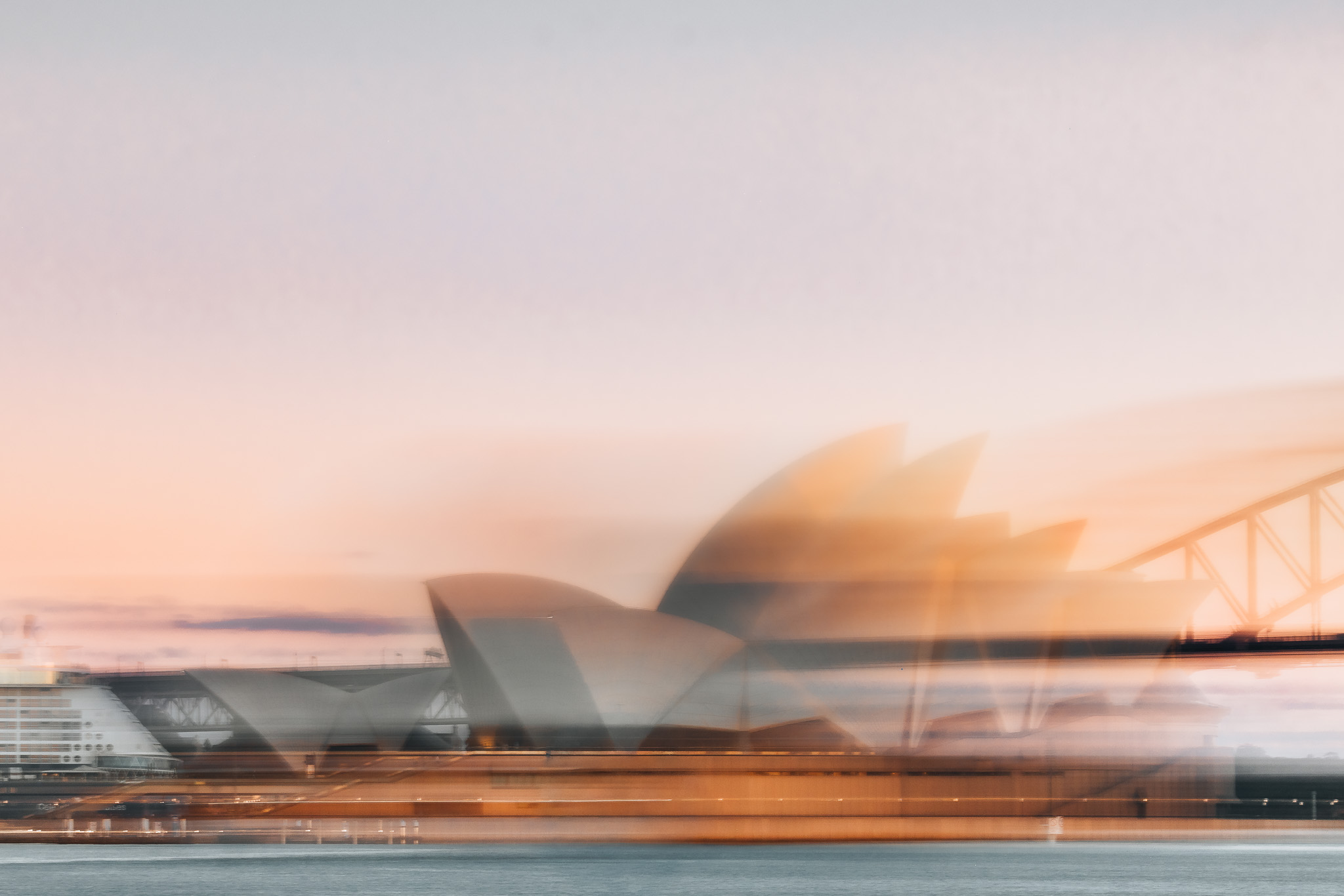
    (I also spent a few frames doing something stranger — dragging the camera through a long exposure to smear the whole thing into motion. That one’s not in the shop yet. But since you’re here:)

    Intentional-camera-movement long exposure of the Sydney Opera House at dawn, the white sails smeared into vertical streaks of motion against a deep blue sky.
    The “drag” frame — same building, same morning, held the shutter open and let it move.

    A quick, honest tangent

    We’d just come through a couple of trips in Asia, and Sydney hit different. It felt so Western — so familiar — that it shrank the world for a minute. A massive, buzzing city on the far side of the planet that somehow felt like it could be home. I’ll also admit that by the time we made it to New Zealand and there was finally some open space and nobody around, I was relieved. You can love a city and still be glad to leave it.

    The postcard

    Greetings from Sydney — Vintage Travel Postcard (Pack of 10)

    The detail shot became Greetings From Sydney in the Postcards Collection — in case you want to drop a cheeky note to a friend or you’re leaning more into creating a collage by framing it.

    — Preston