Author: Preston Ferguson

  • Why Some Photography Prints Last 100 Years — And Others Fade in a Decade

    Why Some Photography Prints Last 100 Years — And Others Fade in a Decade

    Walk into almost any home goods store and you’ll see walls covered with photographic prints.

    They look beautiful at first.

    But give them ten years.

    Many will fade. Colors shift. Paper yellows. Details disappear.

    Yet in museums and private collections around the world, photographic prints created decades ago still look nearly identical to the day they were printed.

    The difference comes down to archival print craftsmanship.

    Understanding what makes a photograph archival helps collectors recognize the difference between a decorative print and a piece of artwork designed to last for generations.


    Why Most Photography Prints Don’t Last

    Many consumer prints are produced using fast, inexpensive materials.

    These often include:

    • dye-based inks
    • wood-pulp paper
    • non-archival coatings

    These materials produce vibrant prints initially, but they’re far more vulnerable to:

    • UV light
    • humidity
    • environmental pollutants

    Over time, these factors slowly break down the image.

    What begins as a vibrant photograph gradually fades.

    This is why many inexpensive prints begin to deteriorate within a decade.


    What Makes a Print Archival

    An archival fine art photography print is produced with materials specifically designed for longevity.

    Three components make the biggest difference:

    Archival Paper

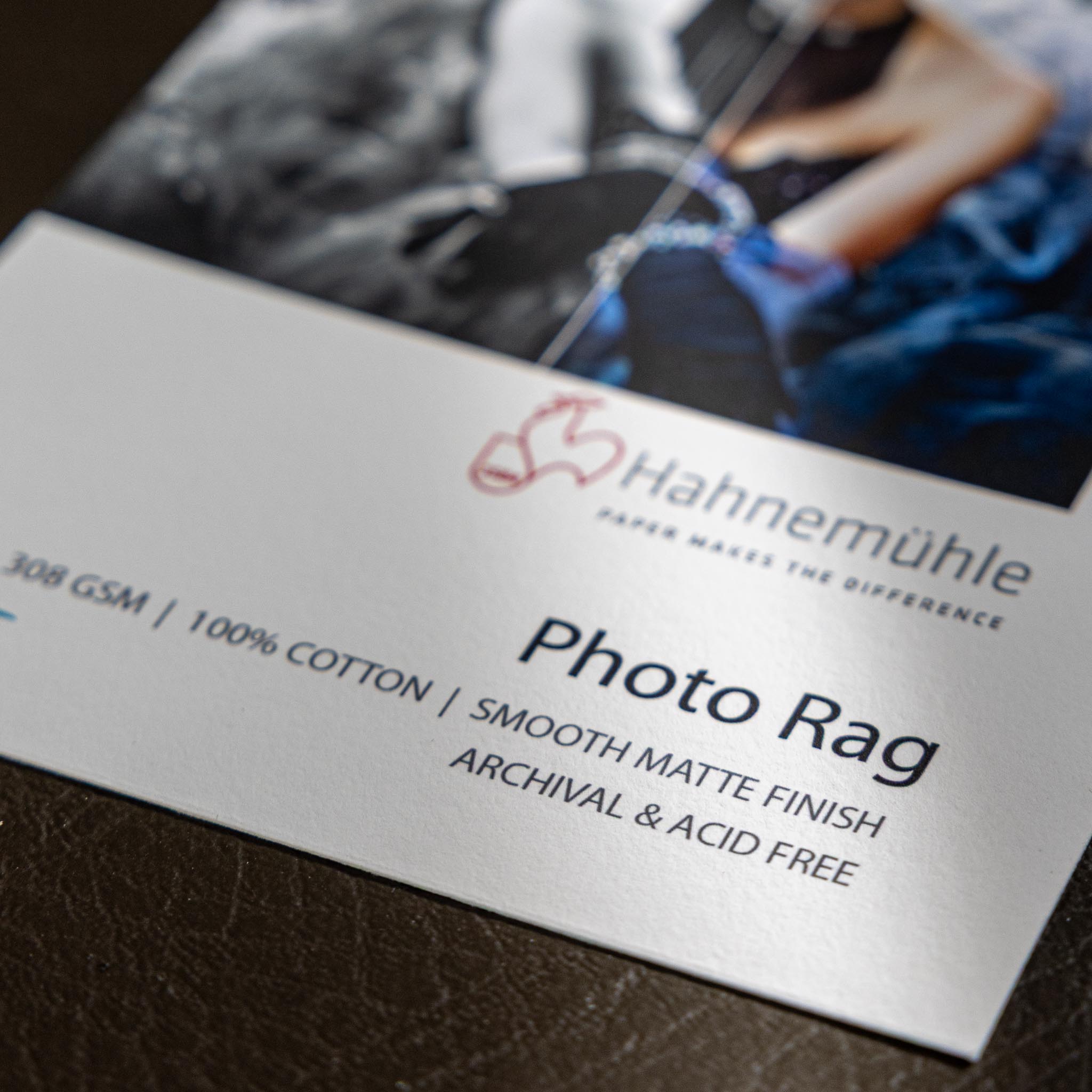
    Museum-quality papers are typically:

    • acid-free
    • lignin-free
    • cotton-based

    Cotton rag papers are especially valued in fine art printing because they resist yellowing and provide exceptional stability over time.

    They also hold extremely fine detail, allowing subtle tones and textures to appear more naturally.


    Pigment-Based Inks

    Fine art prints are typically produced using pigment inks rather than dye inks.

    Pigment inks contain microscopic particles that sit on the surface of the paper.

    This makes them significantly more resistant to fading caused by light exposure.

    When paired with archival paper, pigment prints can maintain color stability for decades.


    Controlled Print Craftsmanship

    Even the best materials require careful production.

    Professional fine art printing involves:

    • calibrated color workflows
    • proof printing
    • controlled lighting environments
    • final inspection before release

    Each step ensures the finished print faithfully represents the photograph.

    You can learn more about the process on the page dedicated to print craftsmanship and archival production standards.


    Why Archival Printing Matters for Collectors

    For collectors, longevity is not just a technical detail.

    It protects the integrity of the artwork.

    Archival printing ensures:

    • the photograph retains its intended color and detail
    • the artist’s vision remains preserved
    • the work can be displayed confidently for decades

    This is particularly important for limited edition photography prints, where the rarity and long-term stability of the work are part of its value.


    Certificates of Authenticity and Provenance

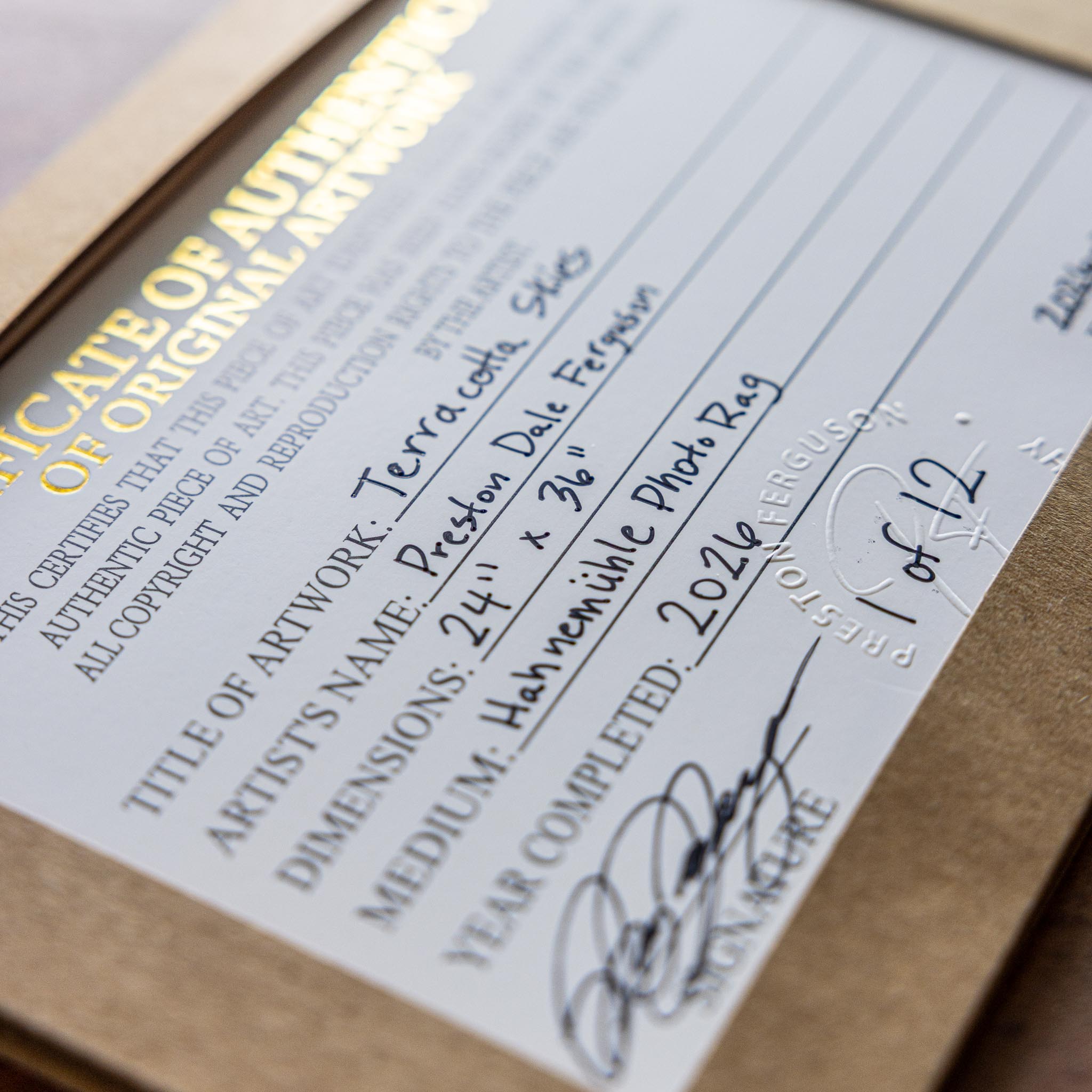
    Many fine art prints are accompanied by a certificate of authenticity.

    This document verifies:

    • the artist
    • the edition number
    • the production details
    • the authenticity of the artwork

    Certificates help collectors maintain the provenance of the piece and confirm its place within the limited edition.

    If you’re interested in learning more, you may also enjoy:

    ➡ What Is a Certificate of Authenticity — And Why It Matters for Collectors


    A Photograph Meant to Last

    Photography captures a moment.

    Archival printing ensures that moment can survive the passage of time.

    When museum-quality materials and careful craftsmanship are combined, a photograph becomes more than a print—it becomes an object built to endure.

    For collectors, that longevity is part of what transforms a photograph into a lasting work of art.


    Featured limited editions

    A curated selection of landscapes available in limited quantities. Visit the shop for current availability, sizes, and framing options.

  • How to Choose the Perfect Utah Location for Family Photos

    How to Choose the Perfect Utah Location for Family Photos

    Choosing a location is one of the biggest decisions you’ll make for your photo session — and in Utah, you’re spoiled for choice.

    From alpine lakes and mountain forests to modern architecture and dramatic desert landscapes, Utah offers some of the most diverse photography backdrops in the country. Whether you’re planning family photos, engagement portraits, or a personal branding session, this guide will help you find a location that matches the look, mood, and energy you want in your final images.

    As a Utah photographer, these are the locations I recommend most often — organized by vibe, so you can quickly narrow down what feels right for you.


    🌲 Mountain & Forest Locations (Romantic + Timeless)

    Guardsman Pass — Park City

    Description: Alpine overlooks, wildflowers, and iconic fall aspens.

    Address: Guardsman Pass Rd, Park City, UT 84060

    Fees: Seasonal parking fee may apply.

    Best for: Engagements, adventurous couples, fall sessions

    Aspen Grove — Provo Canyon

    Description: Dense aspen groves with dreamy golden-hour light.

    Address: 9521 Alpine Loop Scenic Byway, Provo, UT 84604

    Fees: Canyon access fee may apply seasonally.

    Best for: Families, maternity, couples

    Tibble Fork Reservoir — American Fork Canyon

    Description: Mountain lake with dramatic peaks and easy access.

    Address: American Fork Canyon, UT 84003

    Fees: Day-use canyon fee required.

    Best for: Families, engagements, sunrise sessions

    Jordan Pines — Big Cottonwood Canyon

    Description: Forested creekside location with soft light and easy access.

    Address: FR 632, Big Cottonwood Canyon, UT 84121

    Fees: None typically required.

    Best for: Families with young children

    Silver Lake at Brighton Resort — Big Cottonwood Canyon

    Description: Alpine lake with a scenic boardwalk and evergreen forest — mountain feel without the hike.

    Address: 8073 S Big Cottonwood Canyon Rd, Brighton, UT 84121

    Fees: None typically required; parking can fill quickly.

    Best for: Families, engagements, maternity, easy-access mountain portraits

    Logan Canyon (First Dam Area)

    Description: Water, mountain backdrops, and incredible fall color.

    Address: Canyon Rd, Logan, UT 84321

    Fees: None.

    Travel Fee: Flat $100 (more than 60 miles from West Valley City)

    Best for: Seniors, families, couples

    Ogden Canyon

    Description: Dramatic canyon walls with evergreen scenery.

    Address: Ogden Canyon Rd, Ogden, UT 84401

    Fees: None.

    Best for: Adventure-inspired portraits


    🏛️ Urban & Architecture Locations (Modern + Editorial)

    Utah State Capitol — Salt Lake City

    Description: Marble architecture and elegant symmetry.

    Address: 350 State St, Salt Lake City, UT 84103

    Fees: No photography fee.

    Best for: Engagements, formal portraits, bridals

    Cathedral of the Madeline — Salt Lake City

    Description: Gothic architecture and ornate details.

    Address: 309 E South Temple, Salt Lake City, UT 84111

    Fees: Indoor sessions may require permission or fee.

    Best for: Editorial couples sessions

    Downtown Provo

    Description: Historic buildings and urban textures.

    Address: Center St, Provo, UT

    Fees: None.

    Best for: Seniors, branding, couples

    Ogden Historic 25th Street

    Description: Vintage brick streets and urban charm.

    Address: Historic 25th St, Ogden, UT 84401

    Fees: None.

    Best for: Stylish portraits

    Provo City Library

    Description: Historic architecture with timeless arches.

    Address: 550 N University Ave, Provo, UT 84601

    Fees: No fee (check current policies).

    Best for: Engagements and classic portraits


    🌅 Open Landscape & Big Sky Locations (Minimal + Cinematic)

    Great Saltair — Magna

    Description: Iconic lakeside structure and dramatic sunsets.

    Address: 12408 W Saltair Dr, Magna, UT 84044

    Fees: Small parking/entry fee may apply.

    Best for: Couples, artistic portraits

    Antelope Island State Park

    Description: Vast lake views and roaming wildlife.

    Address: 4528 W 1700 S, Syracuse, UT 84075

    Fees: State park entrance fee required.

    Best for: Families, golden-hour sessions

    Little Sahara Sand Dunes — Nephi

    Description: Clean sand tones and minimalist landscapes.

    Address: 27020 W Sand Mountain Rd, Nephi, UT 84648

    Fees: Entry fee required.

    Travel Fee: Flat $100 (more than 60 miles from West Valley City)

    Best for: Engagements, artistic portraits

    Bonneville Salt Flats

    Description: Endless white landscape with surreal reflections after rain.

    Address: I-80 Exit 4 near Wendover, UT

    Fees: None.

    Travel Fee: Flat $100 (more than 60 miles from West Valley City)

    Best for: Editorial or destination-style sessions

    Spiral Jetty

    Description: Iconic earth artwork with minimalist surroundings.

    Address: Near Corinne, UT 84307

    Fees: No fee.

    Travel Fee: Flat $100 (more than 60 miles from West Valley City)

    Best for: Fine-art inspired sessions


    🌿 Easy-Access Nature & Park Locations (Family Friendly)

    Memory Grove — Salt Lake City

    Description: Tree-lined paths and soft greenery downtown.

    Address: 300 N Canyon Rd, Salt Lake City, UT 84103

    Fees: No fee.

    Best for: Families, lifestyle sessions

    Tunnel Springs Park — North Salt Lake

    Description: Rolling hills with sweeping valley views.

    Address: 1080 Eaglepointe Dr, North Salt Lake, UT 84054

    Fees: No fee.

    Best for: Families, maternity

    Thanksgiving Point Gardens — Lehi

    Description: Curated gardens and seasonal blooms.

    Address: 3900 N Garden Dr, Lehi, UT 84043

    Fees: Photography permit/entrance fee required; closed Sundays.

    Best for: Families, spring sessions

    Ogden Botanical Gardens

    Description: Floral gardens with colorful backdrops.

    Address: 1750 Monroe Blvd, Ogden, UT 84401

    Fees: None typically required.

    Best for: Family portraits


    🧱 Indoor & Studio Options (Weather-Proof + Modern)

    Studio Elevn — Salt Lake City

    Description: Industrial studio with natural light.

    Address: Salt Lake City, UT (by reservation)

    Fees: Studio rental fee required.

    Best for: Branding, couples, modern portraits

    White Space Studios — Bountiful / Provo

    Description: Minimalist white interiors and clean aesthetic.

    Address: Bountiful & Provo, UT

    Fees: Rental fee required; reservation needed.

    Best for: Families, newborns, modern portraits

    Wild Willow Studio — Park City

    Description: Neutral tones and soft light.

    Address: Park City, UT

    Fees: Rental fee required.

    Best for: Lifestyle portraits

    Kings Peak Coffee Roasters — Salt Lake City

    Description: Industrial café atmosphere with warm textures.

    Address: Salt Lake City, UT

    Fees: Must coordinate with business; possible fee.

    Best for: Lifestyle and couples sessions


    🔥 Southern Utah & Adventure Sessions (Epic + Bold)

    Snow Canyon State Park — Ivins

    Description: Red and white sandstone with dramatic contrast.

    Address: 1002 Snow Canyon Dr, Ivins, UT 84738

    Fees: State park entrance fee.

    Travel Fee: Quoted individually (southern Utah, overnight travel)

    Best for: Engagements, elopements

    Sand Hollow State Park — Hurricane

    Description: Red rock meets vibrant blue water.

    Address: 3351 Sand Hollow Rd, Hurricane, UT 84737

    Fees: State park entrance fee.

    Travel Fee: Quoted individually (southern Utah, overnight travel)

    Best for: Adventure portraits

    Moab (Arches & Canyonlands)

    Description: Iconic desert landscapes and massive scenery.

    Address: Moab, UT 84532

    Fees: National park entrance fees required.

    Travel Fee: Quoted individually (southern Utah, overnight travel)

    Best for: Destination-style sessions

    Capitol Reef National Park — Torrey

    Description: Epic terrain with fewer crowds.

    Address: Torrey, UT 84775

    Fees: National park entrance fee.

    Travel Fee: Quoted individually (southern Utah, overnight travel)

    Best for: Couples and adventurous families


    📌 A Quick Note About Fees & Travel

    Some locations require entrance fees, permits, or studio rentals. These are paid directly to the venue and help preserve these beautiful spaces.

    For locations more than 60 miles from West Valley City there’s a flat $100 travel fee. Destination sessions that need an overnight — southern Utah, for example — are quoted individually. Either way I’ll confirm the cost before you choose a package.

    If this guide helped you picture the location, the family portraits page covers the rest of it — how a session actually runs, what’s included, and what it costs.

    Ready to Plan Your Session?

    If this guide helped you picture your session, you’re already halfway there. Tell me the vibe you’re drawn to — mountains, city, or desert — and I’ll help you choose the perfect location and timing for the best possible light.

    Contact Form Demo

    Contact Information


    Shoot Details


  • What Is a Certificate of Authenticity — And Why It Matters

    What Is a Certificate of Authenticity — And Why It Matters

    If you’re purchasing a limited edition photograph, you’re not just buying paper and ink. You’re acquiring a documented piece of an archive. And that documentation matters.

    A Certificate of Authenticity (often called a COA) is not decorative paperwork. It is a record of legitimacy.

    If you care about long-term value, provenance, and credibility, you should care about this document.

    What Is a Certificate of Authenticity?

    A Certificate of Authenticity is a signed document issued by the artist (or studio) that verifies:

    • The artwork is genuine
    • The edition size
    • The specific print number
    • The title of the work
    • The year of release
    • The materials used
    • The artist’s signature

    It confirms that the piece you own is part of a legitimate, controlled edition. Without it, proof becomes weaker over time.

    Authenticity: Why It’s Not Optional

    In photography, duplication is easy. Files can be copied. Images can be reprinted.

    That’s why structure matters. A COA confirms that:

    • This specific print was produced under the artist’s supervision
    • It belongs to a declared limited edition
    • It was not reproduced outside that structure

    It draws a line between authorized and unauthorized production. For serious collectors, that line is essential.

    Provenance: The Story of Ownership

    Provenance refers to the documented history of an artwork’s ownership. Over time, provenance builds through:

    • Certificates
    • Receipts
    • Exhibition records
    • Private sales documentation

    If artwork is ever resold or transferred, provenance strengthens credibility. Without documentation, questions arise.

    Decades from now, when a print changes hands, the COA becomes evidence. It protects both the artwork and the collector.

    Edition Tracking: Structural Integrity

    In limited edition photography, tracking is critical.

    Each print has:

    • A number (for example, 7/25)
    • A total edition size
    • A permanent closure once sold out

    A Certificate of Authenticity confirms that:

    • The edition size was declared in advance
    • The specific print number exists within that edition
    • The artist has not exceeded the stated limit

    Collectors rely on this discipline. If edition tracking is inconsistent, scarcity becomes meaningless. Documentation reinforces restraint.

    Long-Term Credibility

    Most people don’t think 20 or 30 years ahead when purchasing art. But credibility compounds over time.

    When collectors, galleries, or estates evaluate a work years later, they look for:

    • Original documentation
    • Consistent edition policies
    • Clear artist signatures
    • Archival production details

    The more complete the documentation, the stronger the work’s standing. A well-documented archive ages better than a loosely managed one.

    How My Certificates Work

    Each limited edition print I release includes:

    • The title of the work
    • The year of release
    • The edition size
    • The individual print number
    • Archival material details
    • My signature

    The edition size is declared in advance and does not change. Once the edition sells out, it closes permanently.

    The certificate corresponds directly to that edition — and exists to protect its integrity.

    I do not reissue sold-out editions.
    I do not expand edition sizes later.
    I do not reproduce the same format once closed.

    The certificate reflects that discipline.

    Why Documentation Matters Decades Later

    Paper fades. Digital platforms disappear. Websites evolve.

    But physical documentation persists.

    If a collector chooses to resell, donate, or pass work to the next generation, documentation supports legitimacy. Without it, questions arise:

    • Was this part of a declared edition?
    • Was the edition exceeded?
    • Was it printed under the artist’s supervision?

    Clear documentation removes uncertainty. And uncertainty weakens value.

    Decorative Prints vs Documented Works

    Again, this is not about superiority — it’s about structure. Decorative prints often do not include formal documentation because:

    • They are not edition-controlled
    • They are reproducible
    • Scarcity is not a factor

    Collectible works include documentation because permanence matters. A Certificate of Authenticity signals that the work was created and released with long-term intention.

    Final Thought

    A Certificate of Authenticity is not just paperwork.

    It is a promise. A promise that:

    • The edition size is real
    • The print is genuine
    • The archive is disciplined
    • The collector is protected

    If you’re beginning to collect fine art photography, ask about documentation. Clarity today protects confidence tomorrow.

    If you’d like to explore my current limited releases — each accompanied by a signed Certificate of Authenticity — you can view available editions here.

    Collect thoughtfully. Document carefully.

    Featured limited editions

    A curated selection of landscapes available in limited quantities. Visit the shop for current availability, sizes, and framing options.