Tag: Documentary

Candid, story-first photography that captures real moments as they happen.

  • New Zealand Has the Best-Dressed Livestock

    New Zealand Has the Best-Dressed Livestock

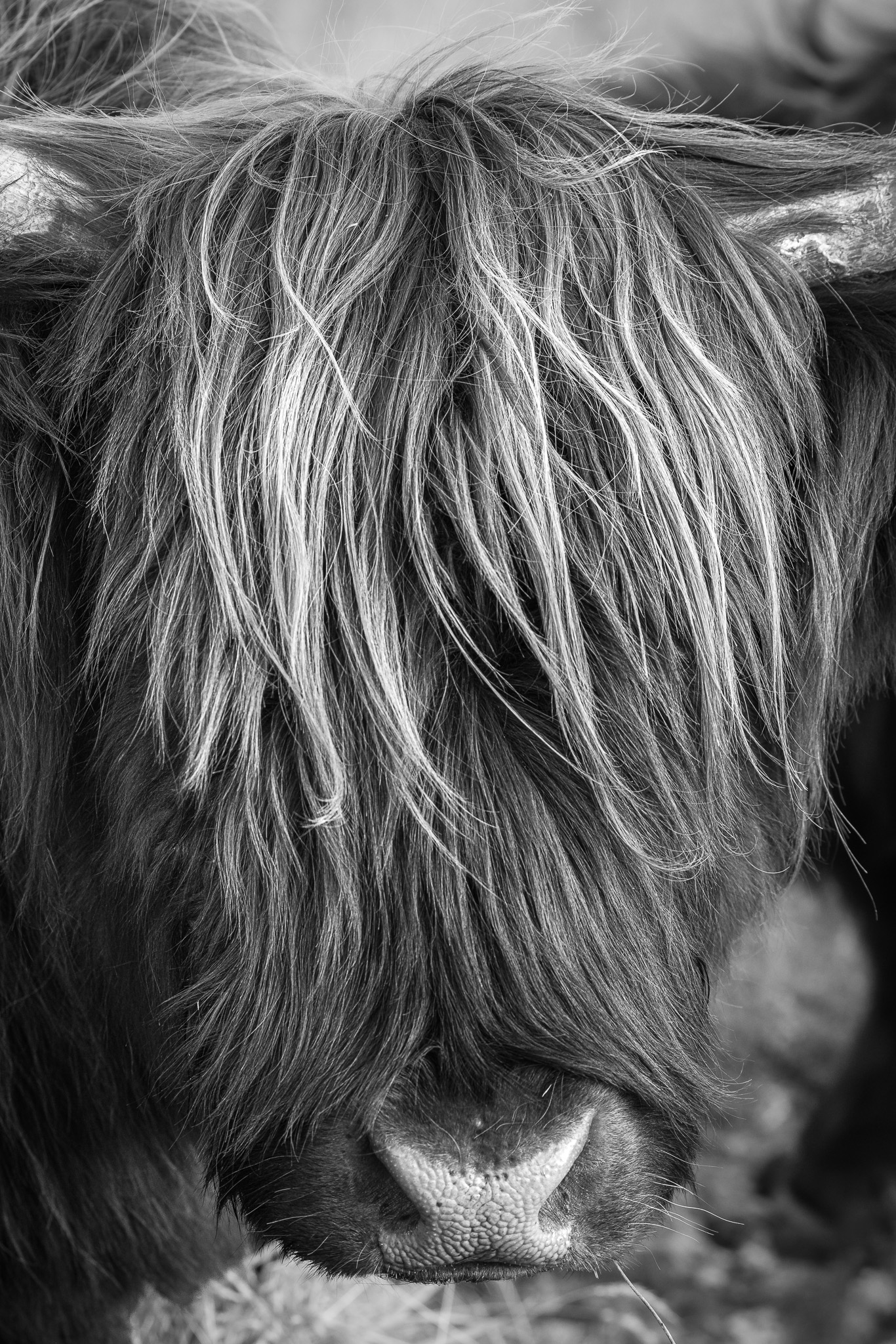
    I went to New Zealand to photograph landscapes and came home with an indefensible number of photos of cows. I regret nothing.

    Here is the situation. New Zealand has the best-dressed livestock on the planet, and I will not be taking questions. The highland cows alone are worth the airfare — enormous, unbothered, with the exact haircut of a rock guitarist who’s been through some things and come out serene. They look at you like they’ve read your emails and decided to forgive you.

    The llamas are running a close second, mostly on attitude. And the sheep — well, there are a lot of sheep in New Zealand, so statistically some of them are going to be photogenic, and they are. I’d be lining up a wide landscape, some genuinely serious composition, and a sheep would wander into frame with better light on it than the mountain.

    I don’t have a grand point here. Not every photograph has to be about the raw, untouched majesty of the end of the earth. Sometimes it’s about a cow with a fantastic fringe. The trip that produced the serious South Island guide also produced a small gallery of extremely dignified farm animals, and I think both are allowed to exist.

    A few of these may end up as prints, because apparently I now make animal portraits. If a highland cow ends up on a postcard, you’ll know exactly why. Until then — see where I’ve been. It’s mostly mountains. It’s a little bit cows.

    — Preston

  • I Drove to a GPS Coordinate I Wasn’t Sure Existed

    I Drove to a GPS Coordinate I Wasn’t Sure Existed

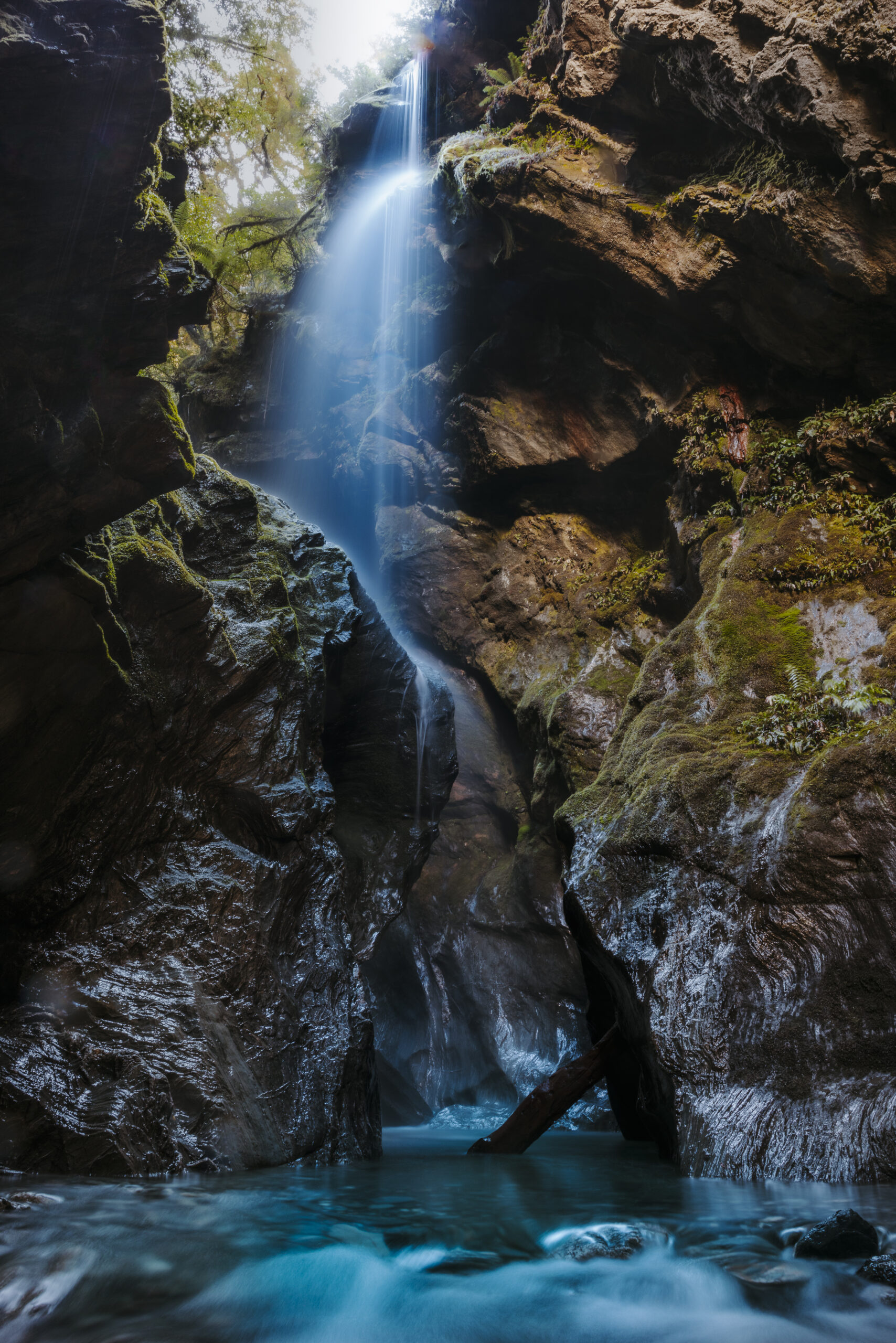
    Everyone else had a plan for the day. Alex was golfing. Matt and Rachel were shopping. And I had a set of GPS coordinates I’d heard were worth the drive, with one small problem: I wasn’t entirely sure the place existed.

    Not “existed” in a philosophical way. Existed in a “the internet said there was a cave and a waterfall back here, but the internet says a lot of things, and it’s probably flooded and definitely cold” way. So I rented a car and drove toward them anyway.

    I stopped at the Blue Pools first, which are exactly as advertised — glacial water so clear it plays tricks on your sense of depth. Then I kept going, out toward Haast Pass, to the coordinates. The water was up. It was cold in the way that gets into your decision-making. But I came prepared — I always come prepared, because the entire premise of what I do is that I was standing in the actual place, and you can’t stand in the actual place from the warm car — and I got back into the cave, to the waterfall, and made the photographs I’d driven out there for.

    Why this is the whole brand in one drive

    I sell real photographs of real places. That line does a lot of quiet work. It means every image has a morning attached to it, a weather report, usually a mild bad decision. The Haast cave is the literal version: nobody handed me that frame. I drove to a coordinate I wasn’t sure was real, on my one free day, and got cold on purpose.

    I’m not telling you this to sound rugged. I’m telling you because when you buy one of these — a postcard, a print, the eventual wall-sized edition — you’re buying the part where I actually went. That’s the difference between what I make and a stock library or an AI that has never once had wet socks. My feet were cold. That’s the product.

    If you want to follow the same road

    The Haast run is one leg of a much bigger South Island loop. I mapped the whole thing — Queenstown to Milford to Haast to the Wanaka Tree to Tekapo — in the South Island photographer’s guide, including where to point the camera and which stops are worth the detour. The cave photos are heading into the print store as I finish them. Until the wall-sized version exists, start small. It still counts.

    — Preston

  • Our Plane Tried to Land in Queenstown Twice, Then Gave Up

    Our Plane Tried to Land in Queenstown Twice, Then Gave Up

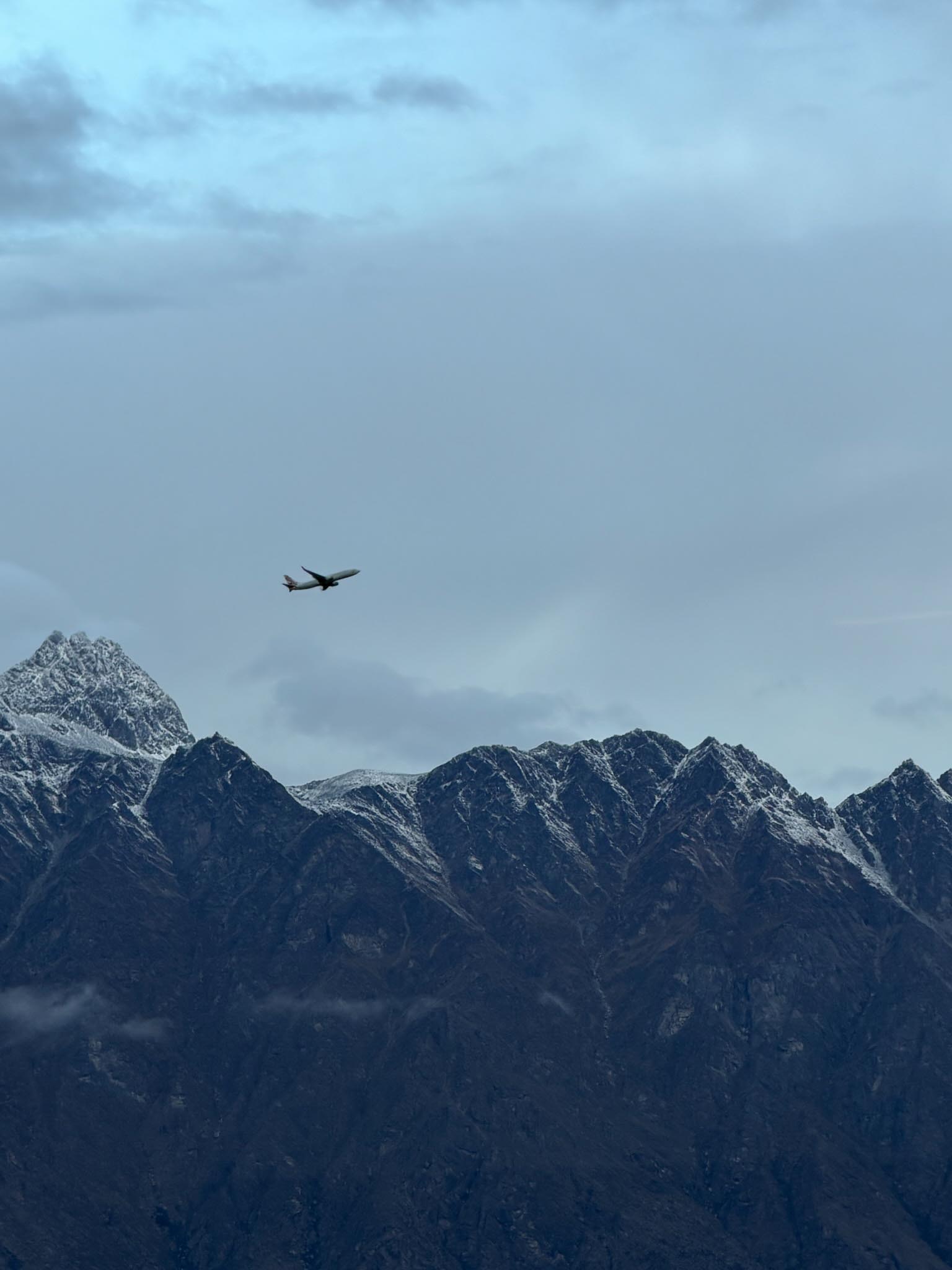
    Queenstown’s airport is tucked between mountains, which is lovely in a photograph and slightly less lovely when you are trying to physically land an airplane in it.

    We came in the first time and got close — close enough to see individual blades of grass, close enough that everyone had already done the quiet thing where you decide the flight went fine and you’re basically home. Then the engines spooled back up and we climbed. Wind. The pilot came around and tried again from the other runway direction, got down to what felt like fifty feet, and pulled up a second time. Two runs at the ground, two polite retreats, and then the announcement nobody wants on the leg they’ve been looking forward to for two years: we were diverting to Christchurch for the night.

    Now, here’s the thing about traveling with Matt. Matt is a master planner. The kind of person who has a backup dinner reservation for a city he was not supposed to be in. We hadn’t been on the ground in Christchurch for an hour before he’d produced a plan: Kaiser Brew Garden, in the Riverside Market — a whole building of restaurants that used to be shipping-container eateries, now a proper food hall. We ate well, slept, and flew back the next morning, and this time the mountains let us in.

    I want to be honest about why I’m telling you this instead of just showing you the pretty version. The pretty version is real too — Queenstown turned out to be a genuine dream, and I’ll get to that. But the brand here has always been I was actually there, and “actually there” includes the part where the plane wouldn’t land and we ate schnitzel in a city we hadn’t booked. The trip is the trip. The mishaps are half of why it’s worth writing down.

    What we got once we finally landed

    Everything, basically. Go-karts and dinner at the top of Skyline Queenstown, looking down over the whole valley. A perfect crisp fall day in Arrowtown, renting bikes and riding out through the countryside to wineries. And a bus-and-boat run out to Milford Sound — we were supposed to fly, but it rained the entire time, so we bused it. Which sounds like a downgrade until the rain turned every cliff face into a waterfall that only exists when it’s pouring. Cold, soaked, worth it. That’s a sentence I could put under half the photographs I’ve ever taken.

    The part that pays for the story

    A lot of what I shot on the South Island is heading into the print store — Queenstown, the Southern Alps, the road out to Milford. If you want the practical version of this trip, the full South Island photographer’s guide walks the whole route and tells you where to actually point the camera. And if you just want a small piece of New Zealand on your desk before the wall-sized version exists, start with the postcard. Nobody starts with the wall-sized version.

    — Preston

  • Documentary Wedding Photography: Capturing the Story of Your Day

    The most meaningful wedding photographs often happen when no one realizes the camera is there.

    While traditional wedding photography focuses on carefully posed portraits and planned moments, documentary wedding photography takes a different approach.

    Rather than directing every scene, documentary photographers observe the day as it naturally unfolds. They capture the quiet exchanges, spontaneous laughter, and emotional reactions that make each wedding unique.

    These unscripted moments often become the photographs couples treasure most because they reflect the true atmosphere of the day.

    What Is Documentary Wedding Photography?

    Documentary wedding photography focuses on storytelling.

    Instead of staging every photograph, the photographer observes the day and captures moments as they naturally occur.

    This style emphasizes:

    • real emotions
    • candid interactions
    • authentic reactions
    • unscripted moments

    The goal is to create a visual narrative of the wedding day rather than a collection of posed images.

    Each photograph becomes part of a larger story.


    Why Couples Are Drawn to This Style

    Many couples today want their wedding photographs to feel genuine rather than overly staged.

    Documentary photography allows them to stay present during their celebration instead of constantly posing for the camera.

    This approach often leads to photographs that feel more emotional and personal.

    A quiet glance during the ceremony, a laugh shared between friends, or a parent’s expression during the vows can carry more meaning than a carefully arranged pose.


    Capturing the Moments Between

    Some of the most memorable photographs happen between scheduled events.

    For example:

    • a bride adjusting her dress before walking down the aisle
    • friends laughing during preparations
    • parents reacting during the ceremony
    • guests celebrating during the reception

    These fleeting interactions create a rich visual story that reflects the energy and atmosphere of the day.

    Because they happen naturally, they often feel more authentic and emotionally resonant.


    A Balance of Documentary and Portraiture

    Even in documentary-style wedding photography, certain moments still benefit from gentle direction.

    Couple portraits, family photographs, and wedding party images often involve some guidance to ensure everyone looks their best.

    The difference is that these moments are usually brief, allowing the rest of the day to unfold organically.

    This balance helps couples receive both timeless portraits and candid storytelling images.


    Staying Present on Your Wedding Day

    One of the greatest advantages of documentary photography is that it allows couples to fully experience their wedding day.

    Instead of stepping away for long photography sessions, they can spend more time with family and friends.

    This approach often creates a relaxed atmosphere where guests forget about the camera and behave naturally.

    And when people forget the camera is present, the photographs often feel more genuine.


    The Story of the Day

    Every wedding has its own rhythm and personality.

    Some celebrations feel joyful and energetic, while others feel intimate and reflective.

    Documentary photography embraces that individuality.

    By capturing the day as it unfolds, the photographs reveal the small details, emotions, and interactions that define the celebration.

    Over time, these images become more than photographs—they become a visual memory of the entire experience.


    Photographs That Grow More Meaningful Over Time

    Years after the wedding, couples often discover that the candid moments become some of their most cherished images.

    These photographs show the people who were present, the emotions that filled the room, and the atmosphere of the celebration.

    They remind couples not only of how the day looked, but how it felt.

    And that emotional connection is what makes documentary wedding photography so powerful.

    If you’re planning your wedding timeline, you may also find this helpful:

    How to Build a Wedding Timeline That Leaves Space for Real Moments

    If that is the kind of coverage you want for your own day, my Utah wedding photography page lays out how it works in practice.